
As soon as he entered his barrack, Rahul noticed a group of seven inmates seated on their mattresses under the television set. They must be the terrorists, Rahul thought to himself. He knew that such accused are usually housed in murder barracks, far from jingoistic gangsters, who tend to abuse and attack them. A fascinating excerpt from Gangster On The Run: The True Story Of A Reformed Criminal.

Indian Mujahideen co-founder Yasin Bhatkal and close aide Asadullah Akhtar were on Friday remanded in police custody for 10 days by a Delhi court in connection with a case lodged against them for the September 2010 Jama Masjid terror attack days before the Commonwealth games.

The National Investigation Agency is busy taking apart each and every possible lead connected to the Patna serial blasts after the suspects held in connection with the terror strike revealed some shocking details to sleuths of the probe agency.

The year 2014 is coming to an end. It was the year of conflict, the year of strife. Year 2014 will be remembered for several reasons -- the rise and threat of the Islamic State, the downing of two Malayasia Airlines aircraft and the sudden and effective way of using hastags on social media to generate a buzz about the event. After all, who can forget #theicebucket challenge and the phenomenon it grew into. Read on as we bring you an overview of international news and events of 2014.

Wednesday's arrest of four terror suspects including that of SIMI mastermind Haider Ali signals the end of the road for organised terror modules in India, claims the Intelligence Bureau. But what's worrying is thatthe Al Qaeda and Taliban are taking keen interest in the terror operations in India. Vicky Nanjappa reports
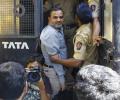
On Wednesday, the special MCOCA court in Mumbai awarded death sentences to Kamal Ahamed Ansari, 37, Mohd Faisal Shaikh, 36, Ehtesham Siddiqui, 30, Naveed Hussain Khan, 30 and Asif Khan, 38, for the role they played in the 7/11 Mumbai train blasts, which claimed the lives of 188 people.

He also emphasised that those giving shelter to terrorists and using them as political instruments must be condemned, an apparent reference to Pakistan.

From the political maelstrom in Washington to the humanitarian disaster in Yemen to the deadly unrest along the Israel-Gaza border, photographers captured a world in turbulent transition.

The arrest of Indian Mujahideen operative Abdul Sattar is proving to be a boon for the National Investigation Agency which has found that a Students Islamic Movement of India activist based in Dubai had acted as a key middle man in the setting up of the IM.
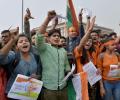
'The emphasis is on nationalism, which the party apparently feels will have greater resonance than one on religious identity which may have lost some of its appeal in recent years.'

The NDA candidate tells the Election Commission that the Maoists plan to kidnap him.

The next big destination for IS in South Asia could be India. In India, the SIMI-IM network can provide the logistics for an IS staging area, says Brigadier S K Chatterji (retd).
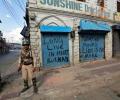
Separatists and their wide network must be neutralized for peace in the Valley

The case took a twist when the defence lawyer sought to call Indian Mujahideen co-founder Sadiq Sheikh as a defence witness after he told the police in 2008 that IM members were responsible for all the blasts that had occurred in India since 2005 including the July 11, 2006 train blasts.

From the Syrian civil war to the Ukrainian crisis to the terror unleashed by the dreaded Islamic State, there was no lack of news in 2014. In this five-part series,rediff.com presents a selection of the year's most enduring moments year from around the world.
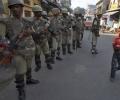
In a year of the Yogi Adityanath regime in Uttar Pradesh, the state has witnessed 1,500 police encounter in which 58 criminals have been killed. On July 2, the Supreme Court sought a reply from the UP government on the issue of police encounter killings after advocate Sanjay Parekh appearing for the People's Union for Civil Liberties pointed out that gross human rights violations were being carried out through these killings under the Adityanath rule. Speaking to Syed Firdaus Ashraf/Rediff.com, PUCL's advocate Sanjay Parekh said that police encounters are not permissible in a democracy.

Mohammad Sajjad profiles Professor Riazur Rahman Sherwani, 94, versatile mind, intrepid intellectual.
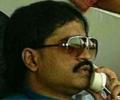
Terrorism, Kashmir and funding of non-profit organsinations dominate Home Minister Rajnath Singh's first IB briefing. Vicky Nanjappa reports

'When integrity is compromised for whatever gratification is when prisoners breach the system and get away.'
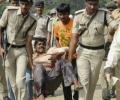
The Patna attack was just the beginning, the alleged SIMI terrorist told NIA agents. His organisation has resolved to attack Narendra Modi wherever possible.

Rediff.com's Indrani Dey digs up chilling details of the ongoing investigation in the Bardhaman blast case, which exposed the a militant network that had been operating in West Bengal since many years.

He was arrested after a 'brief exchange of fire'.

'We have leaders who would rather that we cohabit with the Indian Mujahedeen than fight terror, as long as the payoffs are there in the next polls... Obviously, we are not headed down the best route to keep terror at bay,' says Brigadier S K Chatterji (retd).
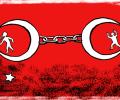
'I have been a court reporter for many years and have not seen such blatant suppression of those who are fighting for human rights, suppression of freedom of expression, and linking it to terrorism.'

Indian Mujahideen co-founder Yasin Bhatkal and his close associate Asadullah Akhtar were on Friday remanded to 12-day police custody by a Delhi court after the National Investigation Agency said their custodial interrogation was required to unearth larger conspiracy of terror attacks.
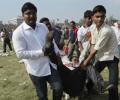
Investigating officials are taking Indian Mujahideen terrorist Tehsin Akhtar's claims with a healthy dose of salt, says Vicky Nanjappa
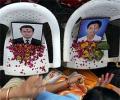
Given the nature of his job, a terrorist heading an underground organisation usually grooms a successor who is prepared to take over in case of his boss's arrest or demise.

'We will continue to support Pakistan as we find no difference. They used to be Indians once upon a time, Yasin Bhatkal told his interrogators, even as Indian Mujahideen has largely transformed into a homegrown terror outfit with tacit support from across the border, reports Vicky Nanjappa.

Pronouncing the verdict, the special Maharashtra Control of Organised Crime Act (MCOCA) court judge Yatin Shinde sentenced to death Faisal Sheikh, Asif Khan, Kamal Ansari, Ehtesham Sidduqui and Naveed Khan who planted the bombs in various trains.

Darbhanga was for long the operations command centre for Indian Mujahideen. But now, details have emerged about how Kolkata has been a preferred destination for the terror outfit.

A Delhi court on Tuesday extended till September 17 the National Investigation Agency custody of Indian Mujahideen co-founder Yasin Bhatkal and his close associate Asadullah Akhtar after the agency claimed they were involved in a deep rooted conspiracy and had executed various blasts in India.

'This is basically aimed at vilifying Nehruvian ideals.' 'Why?' 'Because, Nehruvian leadership is seen by Hindutva forces as the one which did not let them have their Hindu Raj.' 'The Hindutva proponents have always assumed that had Sardar become the first prime minister, India could never have become a secular State,' says Mohammad Sajjad.

Soniya Yadav, slain policeman Ramashankar Yadav's daughter, reveals to Rediff.com's Prasanna D Zore that her father was not supposed to be on duty that fateful night when he was killed in the Bhopal Central Jail.

The man behind Aligarh Muslim University 200 years on.

'The strategy has to be restoring order in one part and countering the very effective propaganda through a very nimble monitoring and response system,' says Lieutenant General Syed Ata Hasnain, who retired as the General Officer Commanding of the Srinagar-based 15 Corps.

'The year in pictures' treks across the globe, looking back on the moments that shaped 2016. From the United States presidential race, to demonetisation in India to the refugee crisis, the news has kept pouring in. Here are our top 50 moments from the world.

'We have to find a way out of this confrontational politics.'
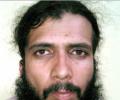
Indian Mujahideen co-founder Yasin Bhatkal and his close aide were sent to custody of the Delhi police for 15 days after a court allowed the plea of the probe agency to arrest them in a case lodged in 2011 for allegedly setting up an illegal arms factory.

There have been no major blasts in the state, but most terror operatives are trained in camps in the state. Extremely volatile, Kerala has been declared a Red Zone by the NIA.

MUST READ: The speech Nayantara Sahgal was not allowed to give.
